Real Raccoon Skull - Pathology
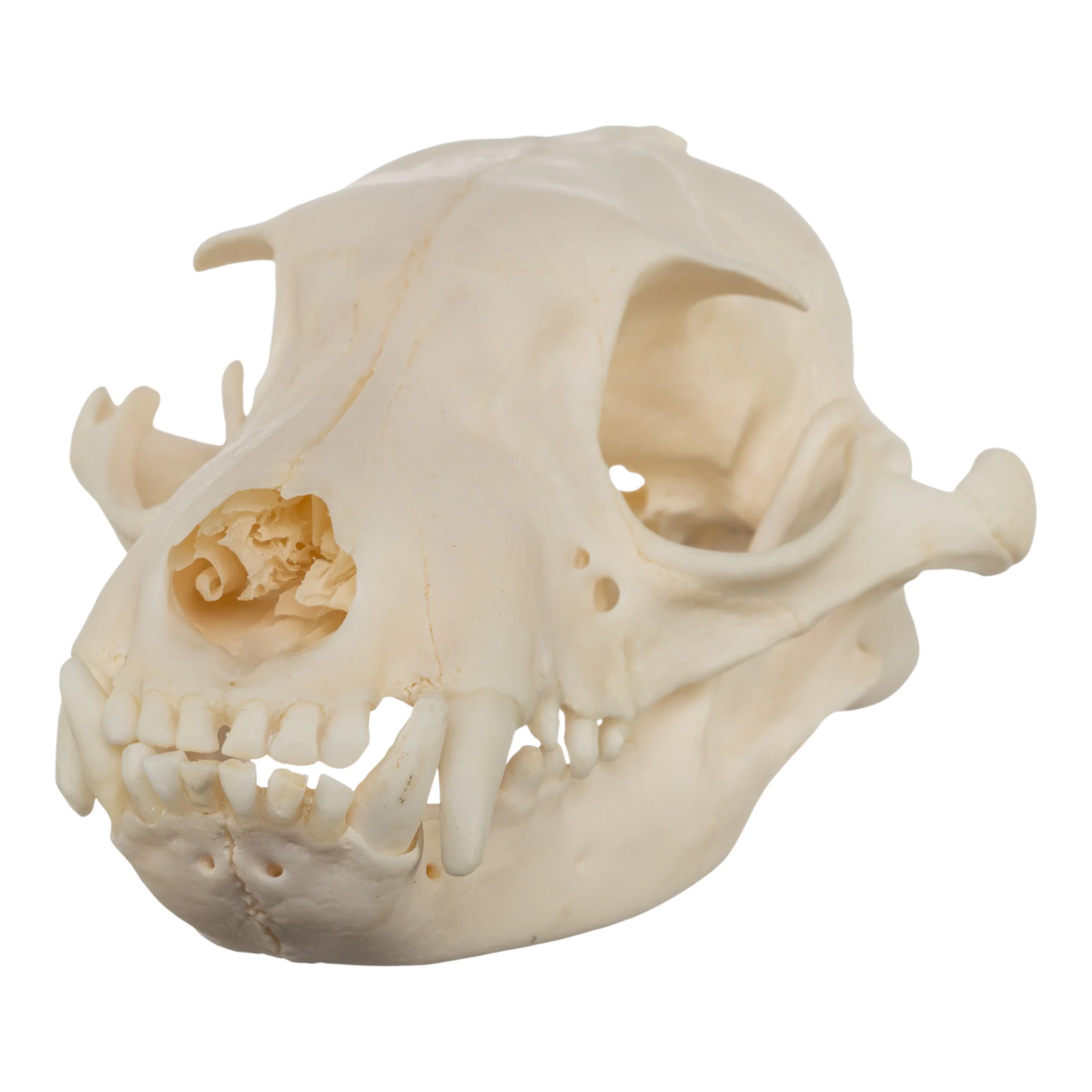
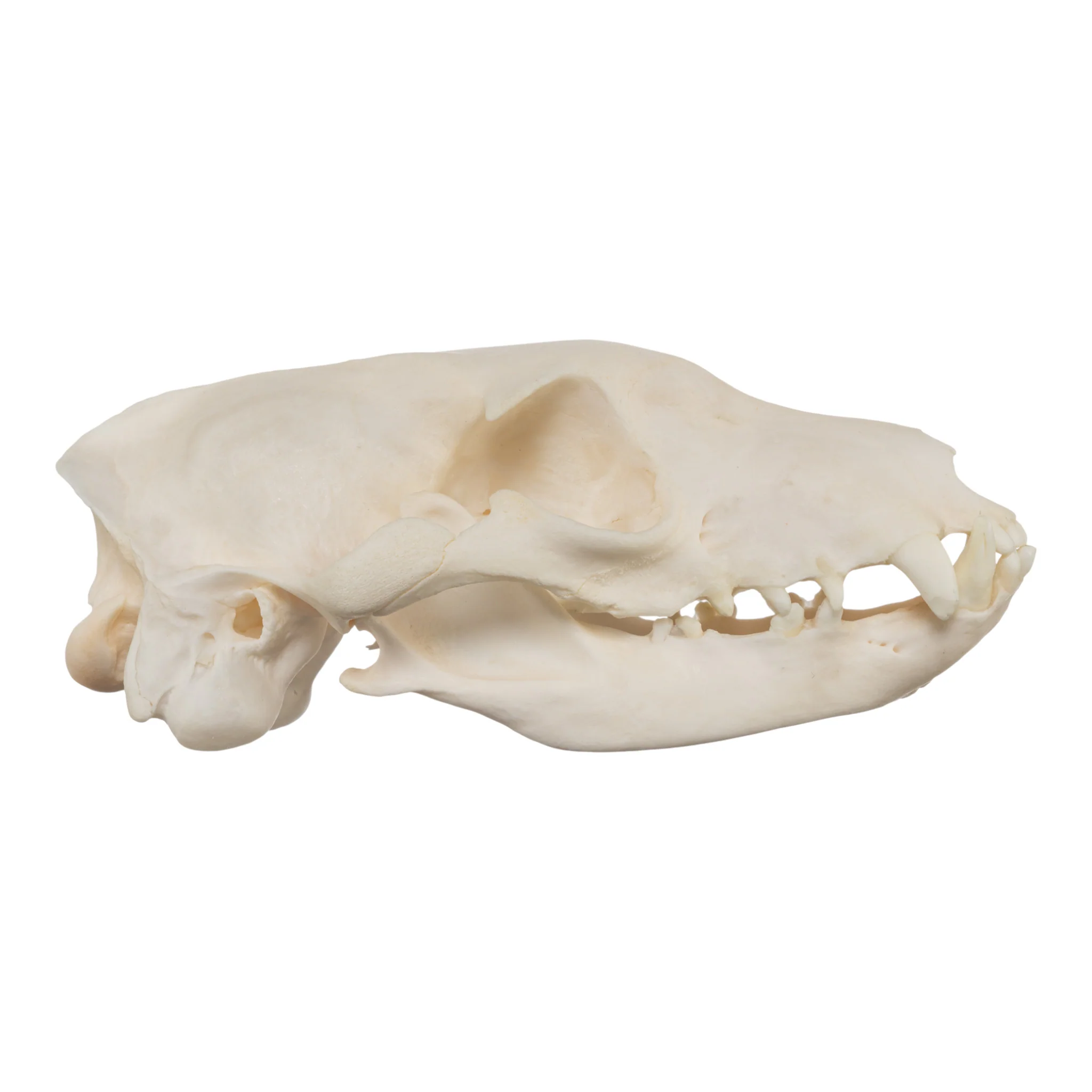
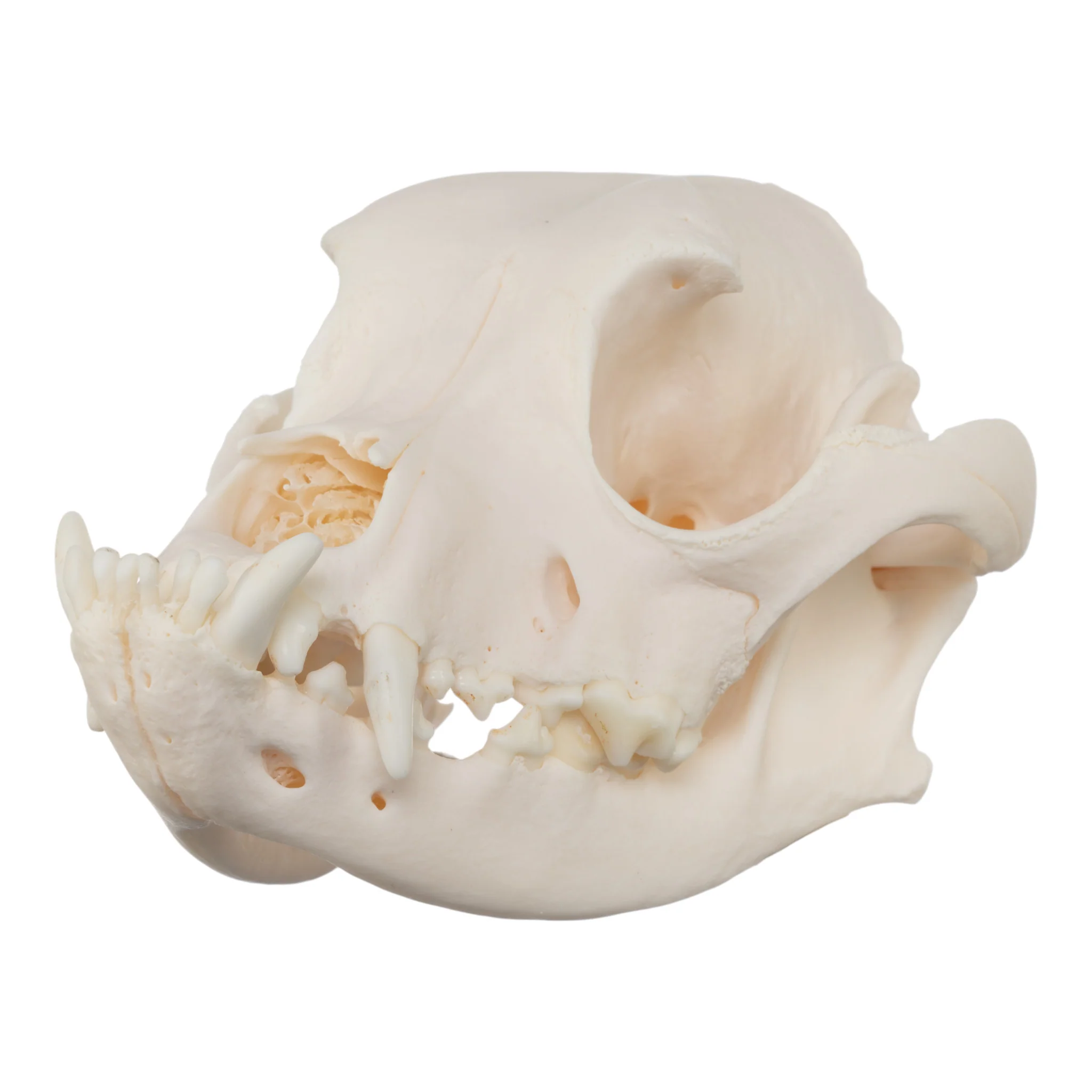
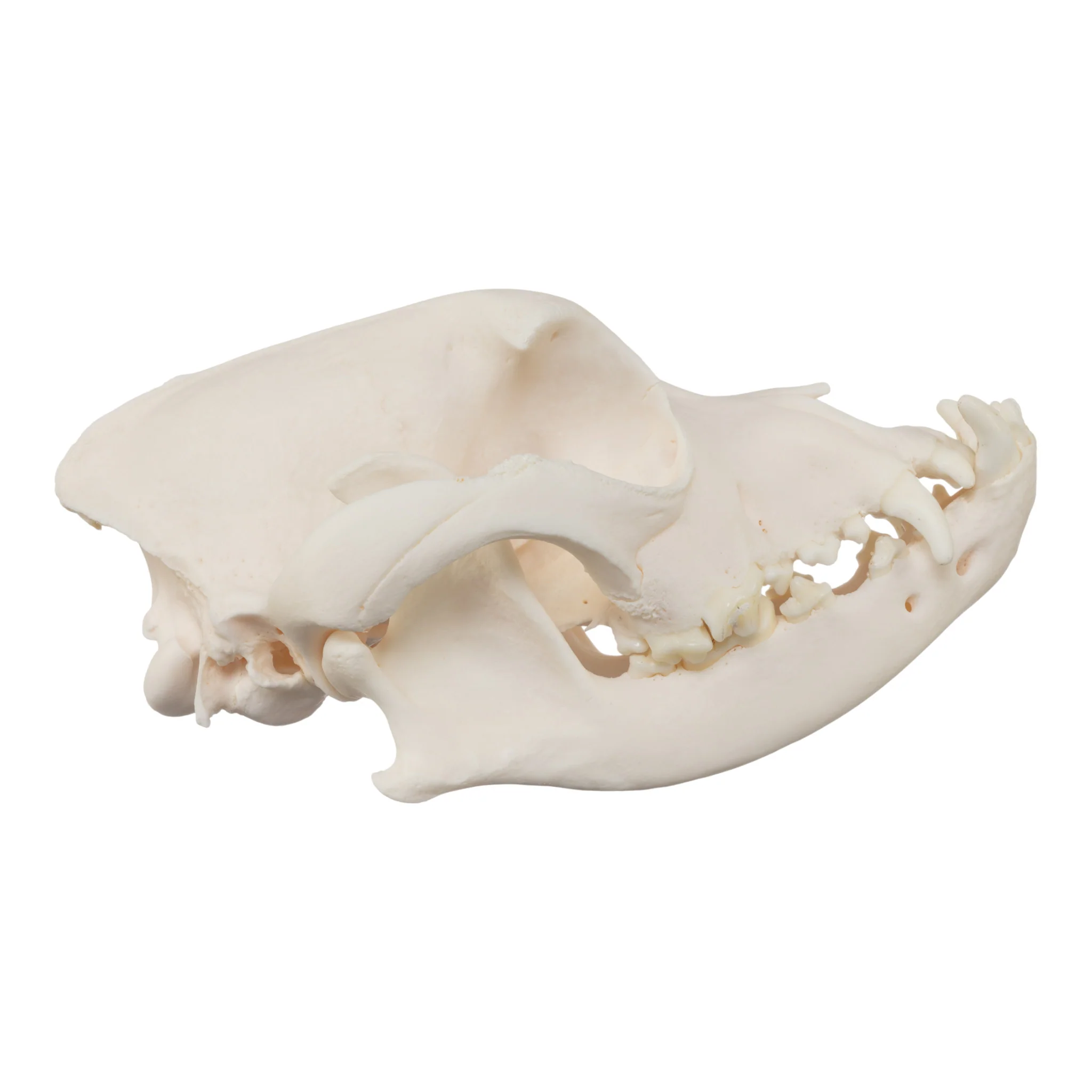
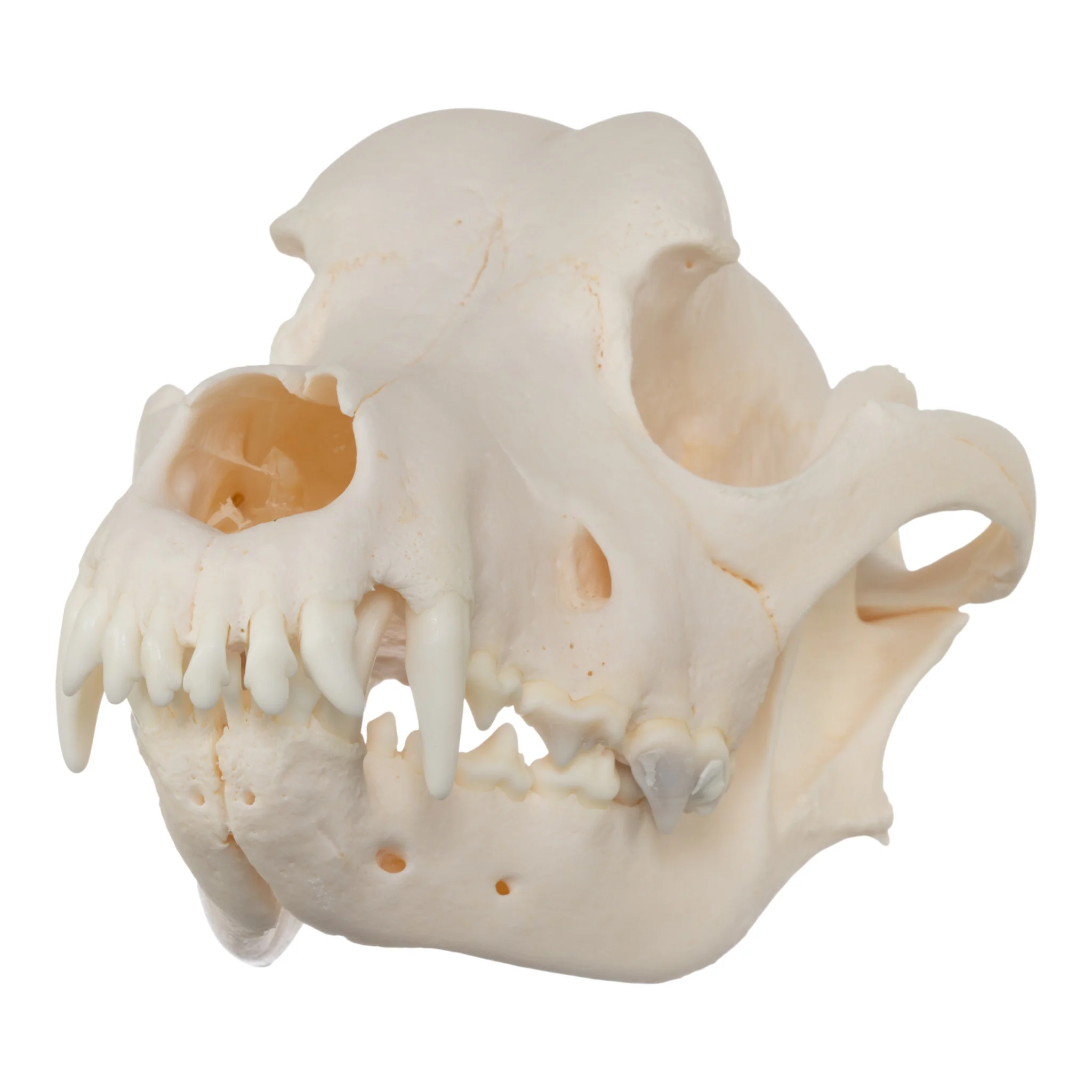
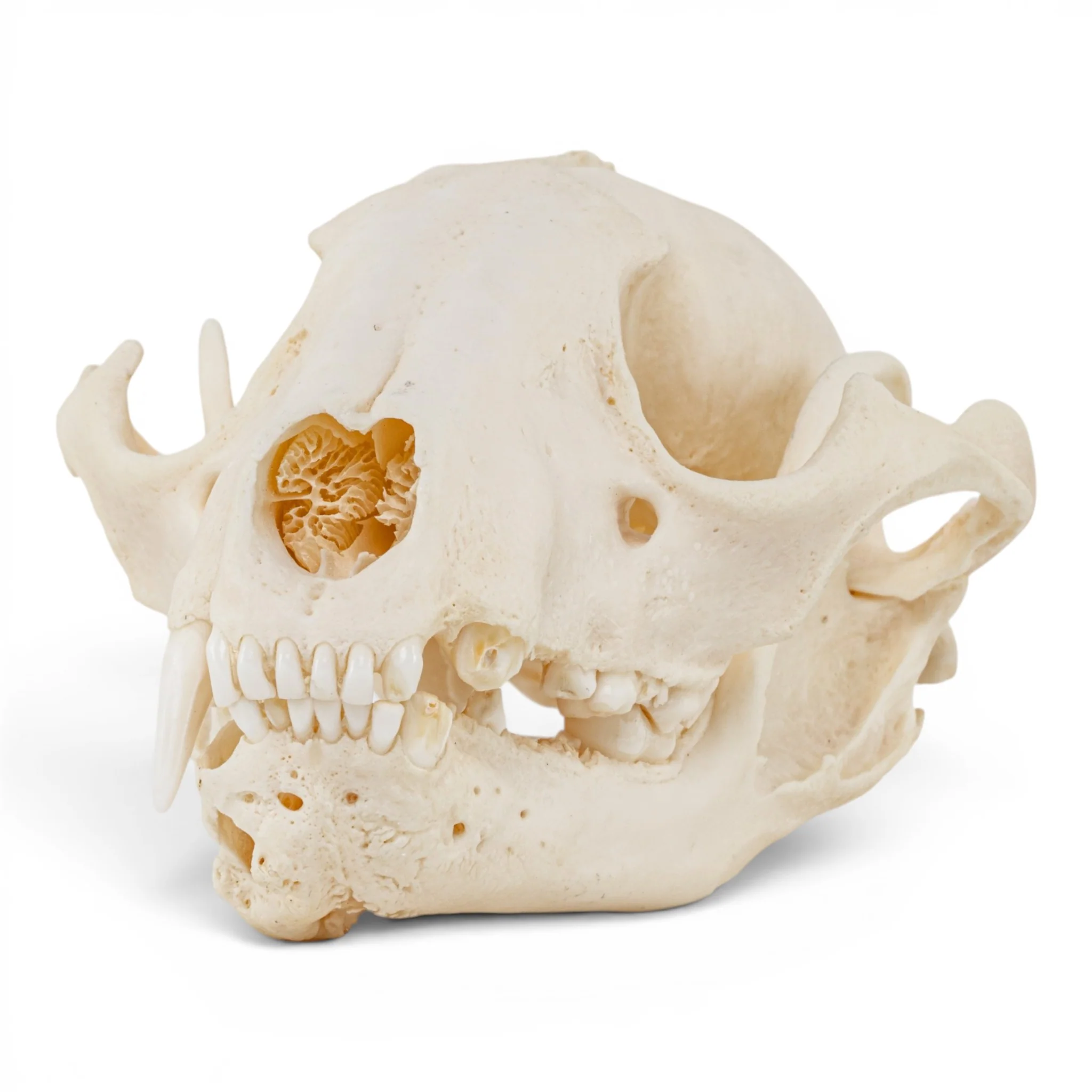
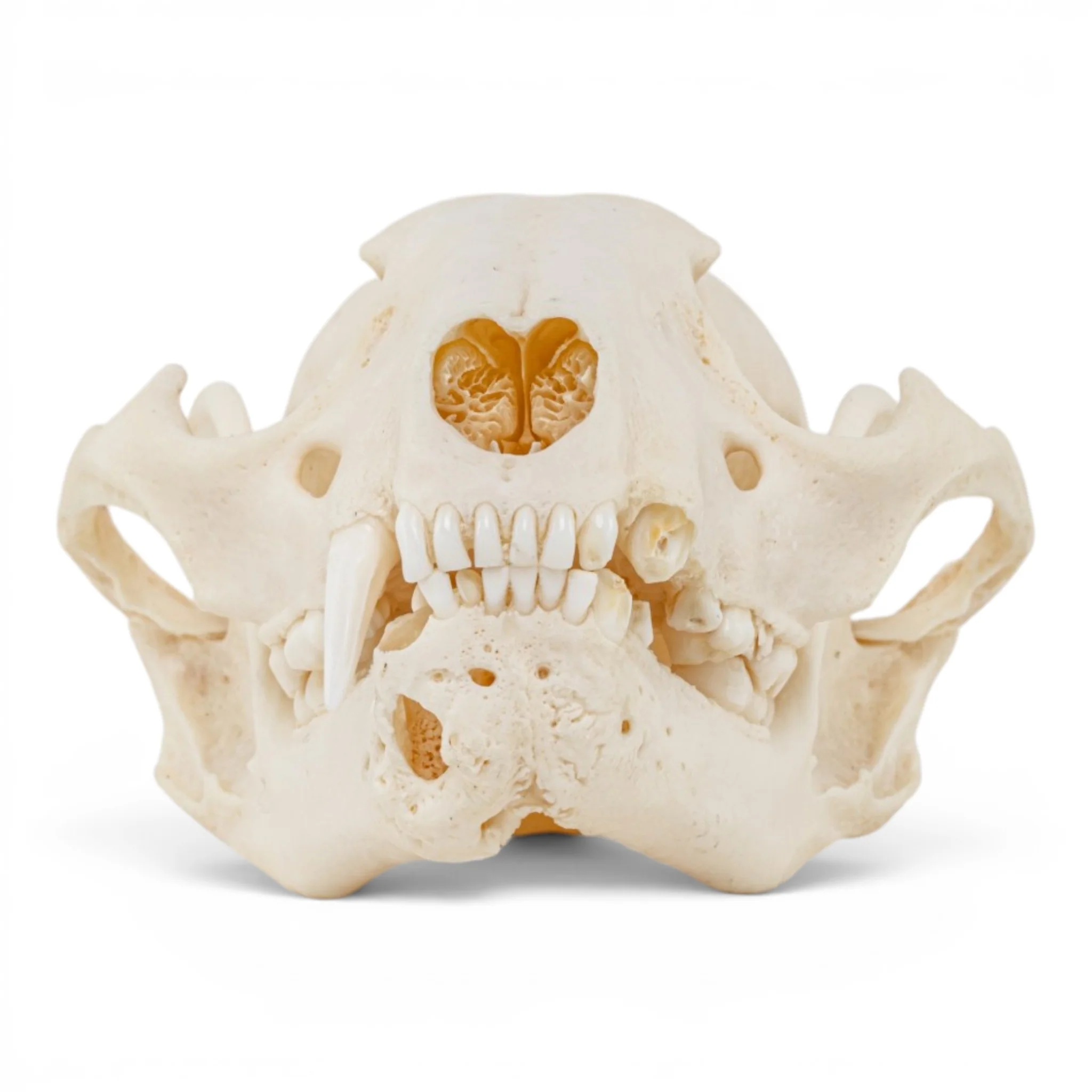
This real raccoon skull specimen exhibits notable pathological features, making it an excellent educational resource for comparative anatomy and pathology studies. The specimen displays mandibular growth and periodontal disease on the right side, along with multiple missing teeth including three canines—clear indicators of the disease process. These pathological characteristics provide valuable insight into dental disease progression in wildlife. Ideal for educational institutions, veterinary programs, and natural history collections seeking authentic specimens that demonstrate real-world pathological conditions.
Raccoons are lively, nocturnal omnivores found from southern Canada to Panama. They are best known for their black bandit-like mask and ringed tail. Raccoon are omnivores; their diet consists primarily of crayfish, crabs, frogs, fish, nuts, seeds, and berries. They are considered pests in some areas but are also sometimes kept as exotic pets.
- Presents with evidence of pathology in the right side of the mandible, exhibiting growth and possible periodontal disease
- Presents several missing teeth, including three canines, due to pathology
- Skull - Pathology Length 12.2 cm (4.8 in)
- Skull - Pathology Width 8.5 cm (3.3 in)
- Skull - Pathology Height 5.9 cm (2.3 in)
Product Information
Product Information
Shipping & Returns
Shipping & Returns



Real Raccoon Skull - Pathology
Real Raccoon Skull - Pathology
This real raccoon skull specimen exhibits notable pathological features, making it an excellent educational resource for comparative anatomy and pathology studies. The specimen displays mandibular growth and periodontal disease on the right side, along with multiple missing teeth including three canines—clear indicators of the disease process. These pathological characteristics provide valuable insight into dental disease progression in wildlife. Ideal for educational institutions, veterinary programs, and natural history collections seeking authentic specimens that demonstrate real-world pathological conditions.
Raccoons are lively, nocturnal omnivores found from southern Canada to Panama. They are best known for their black bandit-like mask and ringed tail. Raccoon are omnivores; their diet consists primarily of crayfish, crabs, frogs, fish, nuts, seeds, and berries. They are considered pests in some areas but are also sometimes kept as exotic pets.
- Presents with evidence of pathology in the right side of the mandible, exhibiting growth and possible periodontal disease
- Presents several missing teeth, including three canines, due to pathology
- Skull - Pathology Length 12.2 cm (4.8 in)
- Skull - Pathology Width 8.5 cm (3.3 in)
- Skull - Pathology Height 5.9 cm (2.3 in)
Original: $89.99
-65%$89.99
$31.50Product Information
Product Information
Shipping & Returns
Shipping & Returns
Description
This real raccoon skull specimen exhibits notable pathological features, making it an excellent educational resource for comparative anatomy and pathology studies. The specimen displays mandibular growth and periodontal disease on the right side, along with multiple missing teeth including three canines—clear indicators of the disease process. These pathological characteristics provide valuable insight into dental disease progression in wildlife. Ideal for educational institutions, veterinary programs, and natural history collections seeking authentic specimens that demonstrate real-world pathological conditions.
Raccoons are lively, nocturnal omnivores found from southern Canada to Panama. They are best known for their black bandit-like mask and ringed tail. Raccoon are omnivores; their diet consists primarily of crayfish, crabs, frogs, fish, nuts, seeds, and berries. They are considered pests in some areas but are also sometimes kept as exotic pets.
- Presents with evidence of pathology in the right side of the mandible, exhibiting growth and possible periodontal disease
- Presents several missing teeth, including three canines, due to pathology
- Skull - Pathology Length 12.2 cm (4.8 in)
- Skull - Pathology Width 8.5 cm (3.3 in)
- Skull - Pathology Height 5.9 cm (2.3 in)